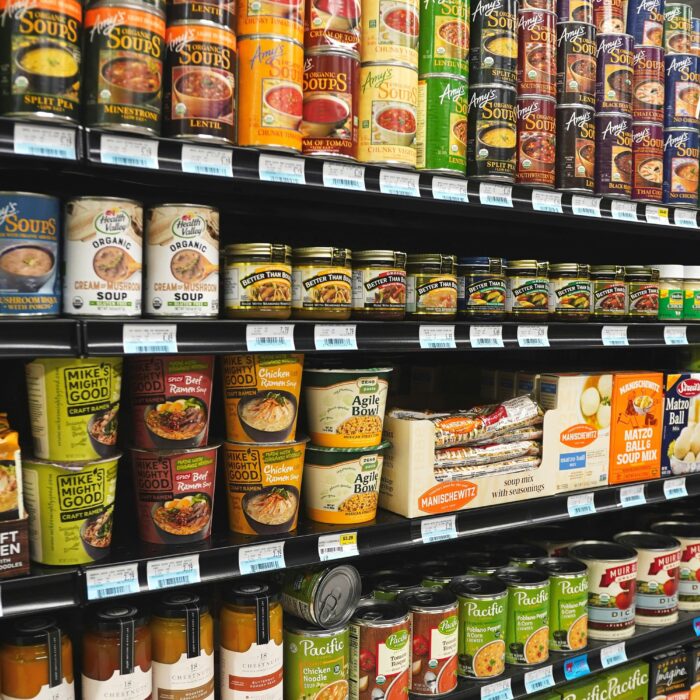

The Pressure Is Real – But So Is the Opportunity
Every FMCG brand is feeling it right now.
Consumers are watching what they spend more closely. Retailers are pushing harder on pricing, promotions, and performance. At the same time, brands are dealing with rising input costs, operational pressure, and increasingly competitive shelves.
For many founders, it feels like they’re being squeezed from both sides.
And when that happens, the instinct is often the same: lower the price, increase promotions, try to stay competitive.
But that’s where a lot of brands start damaging themselves.
Because competing for the value-conscious shopper does not automatically mean competing to be the cheapest. In fact, some of the strongest-performing brands in the market right now are proving the opposite.
They’re winning because they understand that value has become more nuanced than price alone.
“Value” Means Something Different Now
One of the biggest misconceptions in FMCG at the moment is that consumers are only looking for cheap products.
That’s not what we’re seeing.
Consumers are still spending. They’re still buying premium products. They’re still trading into categories that matter to them. But they’ve become more deliberate about why they’re spending.
That distinction matters.
Value today is being assessed through multiple lenses at once:
- Does the product feel trustworthy?
- Does the quality justify the spend?
- Is the pack size right for the occasion?
- Does it solve a real need?
- Does it feel worth putting in the basket again?
This is why some premium products continue to grow while lower-priced competitors stall. The consumer isn’t simply asking, “What’s cheapest?”
They’re asking, “What’s worth it?”
The brands that understand that shift are making much better decisions around positioning, pricing, and ranging.
The Margin Trap Brands Keep Falling Into
The problem is that many brands respond to pressure by becoming overly promotion-dependent.
At first, it works. Volume moves. Retailers respond positively. The numbers look stronger.
But over time, something starts to happen.
The consumer stops buying at full price.
The retailer expects deeper support.
Margins tighten further.
And suddenly the business is relying on discounting just to maintain momentum.
We see this pattern regularly.
A brand enters the market with a strong product and a clear proposition, but slowly trains both the consumer and the retailer to only respond when the price drops. Once that cycle starts, it becomes difficult to unwind.
That’s why we believe brands need to think much more strategically about how they create perceived value before they reach for promotional mechanics.
Because once margin disappears, flexibility disappears with it.
Shelf Positioning Matters More Than Most Brands Think
One of the more overlooked parts of value perception is shelf context.
Consumers rarely evaluate products in isolation. They compare. Constantly.
That means where your product sits, what it sits beside, and how it communicates its role in the category all influence whether it feels “worth it”.
This is where positioning becomes critical.
A product that clearly communicates function, quality, convenience, or differentiation can often hold a stronger price point than founders initially expect. But if the messaging is vague, the product becomes vulnerable immediately.
We’ve seen brands improve performance without changing the product itself – simply by clarifying the value story and tightening how the product shows up on shelf.
Sometimes the issue isn’t price.
It’s that the customer doesn’t understand quickly enough why the product deserves that price.
Pack Architecture Is Becoming a Bigger Strategic Lever
Pack size is also playing a much larger role in how consumers assess value.
Historically, “more for less” dominated FMCG thinking. But today, relevance is often outperforming volume.
Consumers are increasingly looking for products that fit specific occasions and budgets more precisely. Smaller formats, grab-and-go options, and controlled portions are all changing how value is perceived.
That creates opportunities for brands willing to think differently about pack architecture.
A better-aligned pack can improve accessibility without forcing the entire product into a lower pricing position.
This is particularly relevant in convenience and petrol channels, where shoppers are often making fast, occasion-based decisions rather than weekly stock-up purchases.
The brands that understand usage occasions tend to protect margin far more effectively than the ones chasing broad discounting strategies.
Category Data Changes the Conversation
One of the biggest mistakes smaller brands make when pitching retailers is trying to justify price emotionally rather than commercially.
Retail buyers are not simply looking for cheap products. They’re looking for products that improve category performance.
That’s an important difference.
This is where data becomes critical.
Strong category insights can help demonstrate:
- Why the product fills a gap
- Which shopper mission it serves
- How it supports premiumisation or trade-up behaviour
- Why the pricing structure makes sense within the category
When brands can clearly explain how they contribute to category growth, the conversation shifts away from “Why is this expensive?” to “Why does this deserve space?”
That’s a far stronger position to negotiate from.
At Consult Group, this is one of the biggest shifts we help brands make – moving from product-focused selling to category-focused selling.
Because retailers think in categories first.
The Wrong Channel Mix Quietly Kills Margin
Another issue we see often is brands pursuing the wrong channel strategy too early.
There’s a tendency in FMCG to treat major grocery as the only version of success. But not every product should start there, and not every product performs best there.
Convenience and petrol channels are becoming increasingly important for brands looking to maintain stronger margin structures while building awareness.
Why?
Because these channels are driven more heavily by immediacy, function, and occasion-based purchasing. The customer mindset is different.
A product that may struggle in a highly price-sensitive supermarket environment can perform exceptionally well in a convenience setting where speed and relevance matter more than price comparison.
We’re seeing more brands use these channels strategically – not as secondary options, but as deliberate growth platforms.
And in many cases, it’s allowing them to build stronger traction before expanding more broadly into grocery.
The Brands Performing Best Right Now Have Clarity
What stands out most in the current market is how clearly strong brands communicate their role.
They know:
- Who they’re for
- What problem they solve
- What occasion they fit
- Why the product deserves its place in the basket
That clarity flows through everything:
- Packaging
- Pricing
- Format
- Shelf positioning
- Retail conversations
- Promotional strategy
And because of that alignment, they rely less heavily on discounting to drive movement.
The value is already understood before the price conversation even starts.
Where Consult Group Fits In
What we’re seeing more than ever is that margin pressure rarely comes from one single issue.
It’s usually a combination of small misalignments:
- Weak positioning
- Poor ranging decisions
- Over-reliance on promotions
- Incorrect channel strategy
- Unclear value communication
Individually, they seem manageable. Together, they erode profitability quickly.
At Consult Group, we work with brands to bring those pieces together properly.
Not just to help products get ranged, but to help brands build sustainable retail strategies that protect both growth and margin over the long term.
Because in the current market, winning the value-conscious shopper isn’t about racing to the bottom.
It’s about making the product feel worth choosing in the first place.

Final Thought
The brands that navigate the next few years successfully won’t necessarily be the cheapest.
They’ll be the clearest.
Clear value.
Clear positioning.
Clear role within the category.
That’s what gives consumers confidence to spend – even when they’re being more selective.
And for brands, that clarity is often the difference between protecting margin… and slowly discounting it away.