The Shelf Is Working Harder Than Ever
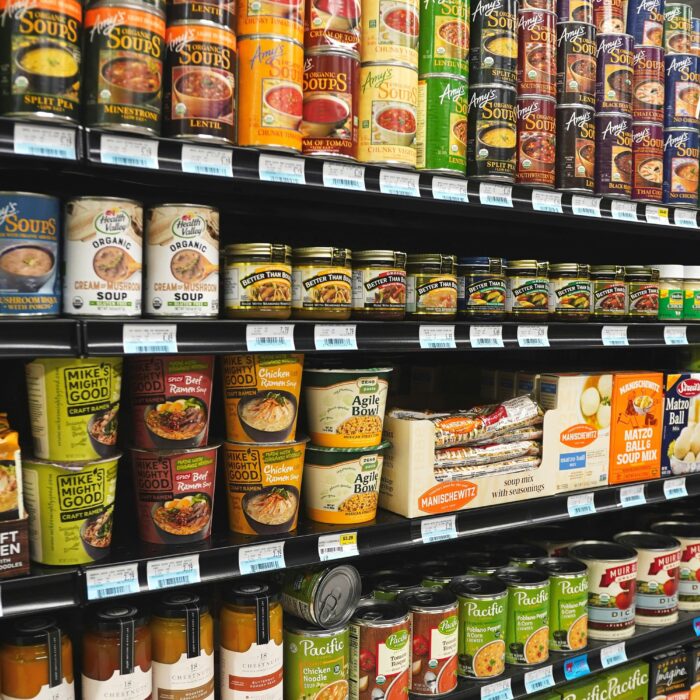
For years, FMCG brands have invested heavily in getting products onto shelves. Today, the challenge is increasingly about what happens once they’re there.
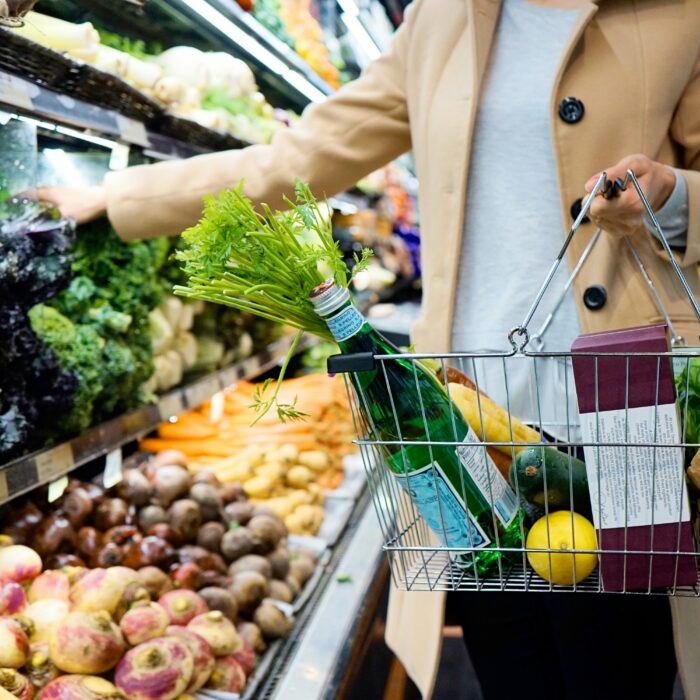
Australian consumers are becoming more deliberate with their purchasing decisions. Whether driven by cost-of-living pressures, changing shopping habits, or simply having more information at their fingertips, shoppers are placing fewer products into their baskets on impulse alone. Every purchase is being scrutinised more closely, and every product is competing harder for attention.
That might sound like bad news for FMCG brands. In reality, it creates a significant opportunity.
Because while shoppers may be more selective, they are still making unplanned purchases every day. The difference is that those purchases now need to be earned.
This is where in-store influence becomes critical.
The brands that understand how to use packaging, displays, product positioning, promotions, and sensory cues to influence behaviour at the point of purchase are often the ones that outperform competitors, even in categories where consumers are spending more cautiously.
The Last Few Seconds Matter Most
One of the biggest misconceptions in FMCG is that purchase decisions are made long before consumers reach the shelf.
While brand awareness, advertising, and social media certainly play a role, the final decision is often made in-store.
We’ve seen countless examples where a consumer enters a store intending to buy one product and leaves with something completely different. Not because they changed their mind, but because something else captured their attention at the right moment.
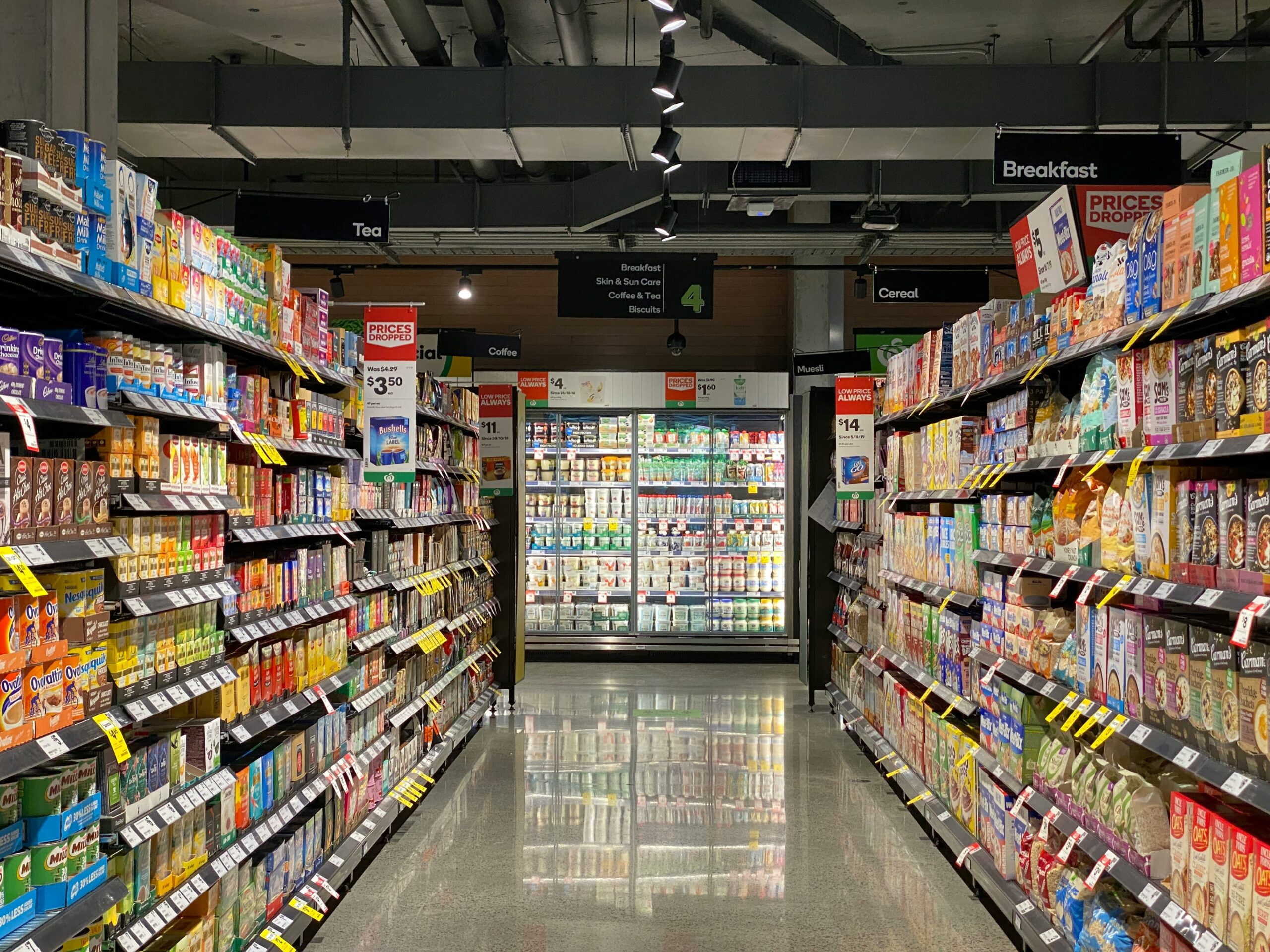
That’s why the shelf remains one of the most powerful media channels in retail.
Unlike digital advertising, where attention is fragmented, the shelf sits directly in front of a consumer who is already in buying mode. The opportunity to influence behaviour is immediate and measurable.
The challenge for brands is understanding what drives that influence.
Packaging Has Become a Silent Salesperson
Packaging has always been important, but its role is evolving.
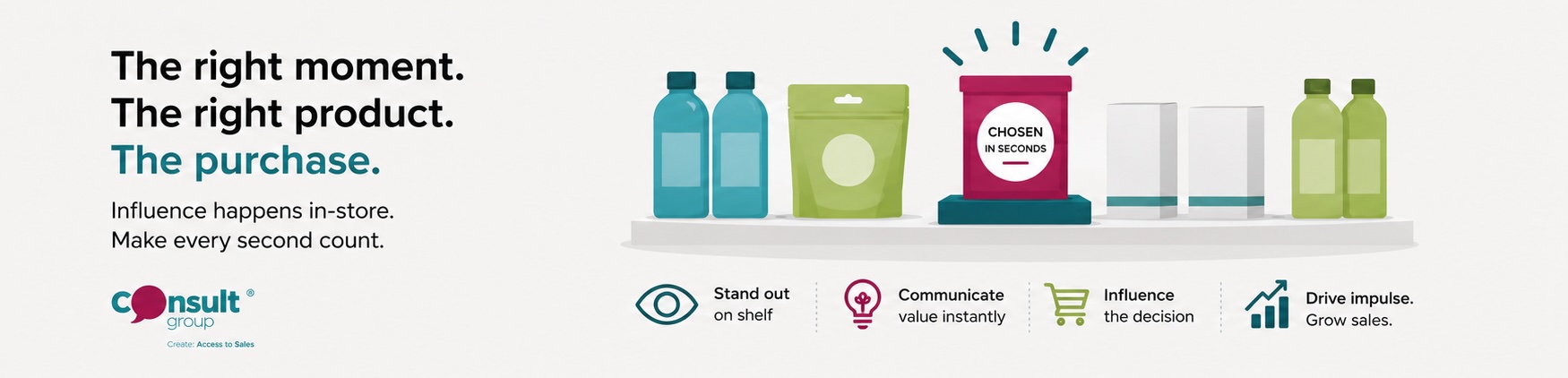
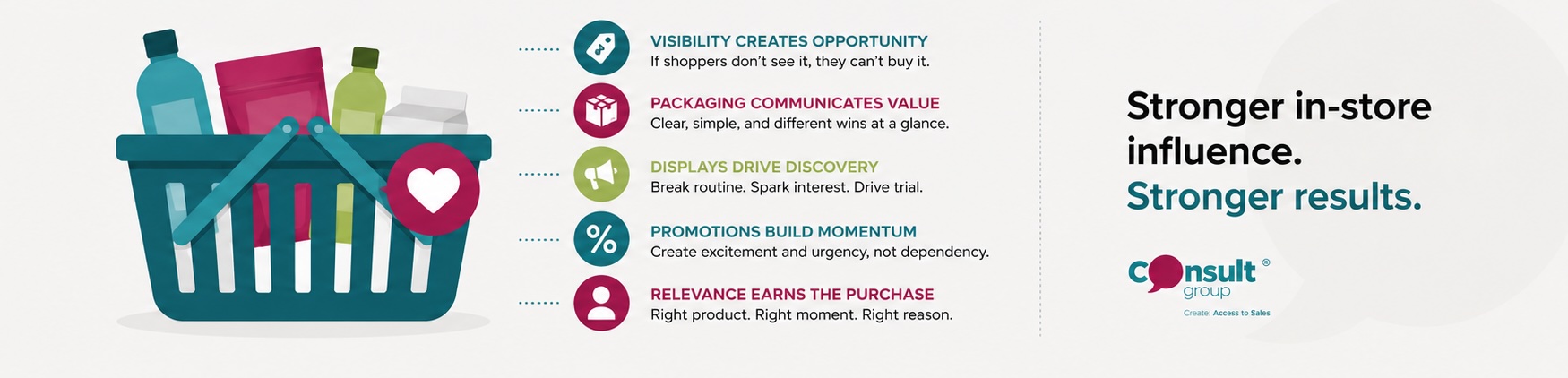
Today, packaging needs to do far more than simply look attractive. It needs to communicate quickly and clearly.
Consumers are making decisions in seconds. They are scanning shelves, comparing options, and looking for shortcuts that help them determine whether a product deserves a place in their basket.
That means packaging must answer key questions immediately:
- What is the product?
- Why should I care?
- What makes it different?
- Why should I trust it?
The strongest-performing products tend to communicate these answers effortlessly. They don’t force the consumer to work for the information.
In many categories, simplifying the message can have a greater impact than adding another claim or design element.
When consumers are processing hundreds of products in a single shopping trip, clarity often wins.
Displays Still Drive Discovery
As shopping becomes more planned, displays are becoming more important.
A well-positioned display creates an interruption. It breaks routine. It introduces products outside their traditional category context and creates opportunities for discovery.
This is particularly important for emerging brands.
Consumers rarely walk into a store actively searching for a brand they’ve never heard of. But they may discover it through a secondary display, end cap, checkout placement, or promotional feature.
Some of the most successful product launches we’ve worked on have benefited from strong in-store execution, where display strategy played just as important a role as the product itself.
The reality is that visibility creates opportunity.
If shoppers don’t see a product, they can’t buy it.
Sensory Cues Continue to Influence Behaviour
One area that is often underestimated is the role sensory cues play in purchase decisions.
Colour, imagery, texture, and even product shape can influence how consumers perceive quality, flavour, freshness, and value.
Retailers understand this well. Entire store layouts are designed around influencing behaviour and encouraging exploration.
The same principles apply at a product level.
A pack that feels premium often creates a premium perception before the product is even opened. A design that communicates freshness can influence expectations around taste. Certain colours can signal energy, indulgence, health, or functionality.
These cues may seem subtle, but they have a significant impact on how products are perceived and ultimately chosen.
The brands that understand this are often able to create stronger connections with consumers without changing the product itself.
Promotions Need to Create Excitement, Not Dependency
Promotions remain one of the most effective tools for driving trials and generating impulse purchases.
However, not all promotions are created equal.
One of the biggest mistakes brands make is becoming overly reliant on discounting. While deep discounts may generate short-term volume, they can also condition consumers to wait for the next promotion.
The stronger approach is to use promotions strategically.
The goal should be to create urgency, encourage trial, or support a specific occasion, not to become permanently dependent on lower pricing.
Some of the most effective promotional programs combine strong shelf visibility with a compelling reason to buy now.
The promotion becomes an amplifier of value rather than a substitute for it.
That’s a critical distinction.
Convenience Is Reshaping Impulse Purchasing
The rise of convenience and petrol channels is also changing how impulse purchases happen.
Consumers increasingly expect products to fit seamlessly into their day. They are looking for solutions that are quick, relevant, and easy to consume.
This has created opportunities for brands that understand occasion-based purchasing.
Products designed around specific missions. Whether that’s a mid-afternoon energy boost, a post-gym snack, or an on-the-go meal replacement, these products are often performing strongly because they align with real consumer behaviour.
In many cases, convenience channels allow brands to communicate value through relevance rather than price.
A product that perfectly matches the moment doesn’t need to be the cheapest option available.
It simply needs to be the most appropriate.
The Future of Impulse Is Relevance
When people talk about impulse purchasing, they often imagine spontaneous decisions with little thought behind them.
But modern impulse is becoming increasingly intentional.
Consumers are still making unplanned purchases. They’re simply making them for better reasons.
The products that earn those purchases are typically the ones that combine strong visibility with clear relevance.
- They solve a problem.
- They satisfy a need.
- They fit a specific occasion.
- They communicate their value quickly.
In a market where shoppers are becoming more selective, those qualities matter more than ever.
Where Consult Group Fits In
At Consult Group, we’ve spent more than 30 years working with brands, retailers, and distributors across Australia.
What we’ve learned is that successful retail execution rarely comes down to one thing.
It’s the combination of product, positioning, packaging, channel strategy, retailer relationships, and in-store execution working together.
The brands that consistently drive impulse purchases aren’t necessarily the biggest brands or the ones spending the most money.
They’re the ones that understand shopper behaviour and build their retail strategy around it.
Because ultimately, influencing a purchase isn’t about being louder.
It’s about being more relevant at the exact moment a consumer is making a decision.
Final Thought
The future of in-store influence isn’t about tricking consumers into buying more.
It’s about understanding what matters to them and making it easier to choose your product when the moment arises.
As baskets become more considered and competition for attention intensifies, brands that master visibility, relevance, and execution will continue to earn their place in the trolley.
And in today’s retail environment, that can make all the difference.