
The Private-Label Challenge
Private label is no longer simply the lower-cost alternative sitting alongside national brands. Over the past decade, retailers have invested heavily in developing their own product ranges, improving quality, refining packaging, expanding premium offerings and strengthening customer trust. For many Australian shoppers, choosing a private-label product is no longer seen as a compromise – it’s simply another purchasing decision. At the same time, cost-of-living pressures have encouraged consumers to scrutinise their spending more closely, accelerating the growth of retailer-owned brands across many FMCG categories.
For branded manufacturers, this has understandably created concern. But viewing private label purely as a threat overlooks a much bigger opportunity. The reality is that retailers don’t want every product on their shelves to be private label. They still rely on branded products to drive innovation, create shopper excitement, attract consumers into categories and deliver long-term growth. The challenge for FMCG brands isn’t to compete directly with private label on price. It’s to offer retailers and consumers something that private label cannot.
Private Label Has Raised the Standard
The days when private label was associated with plain packaging and limited quality are largely behind us.
Today’s retailer-owned brands are often professionally branded, well merchandised and positioned across multiple price points. From premium grocery lines to health-focused products and ready-to-eat meals, retailers have become sophisticated brand owners in their own right.
This evolution has changed the competitive landscape.
Where branded products may once have relied on familiarity or heritage alone, today’s consumers expect every product to justify its place in their shopping basket. Strong packaging, quality ingredients, compelling product benefits and clear value have become the minimum standard rather than points of difference.
Rather than resisting this shift, successful brands recognise that it has simply raised the expectations of the market. The brands that continue to grow are those that continue to evolve.
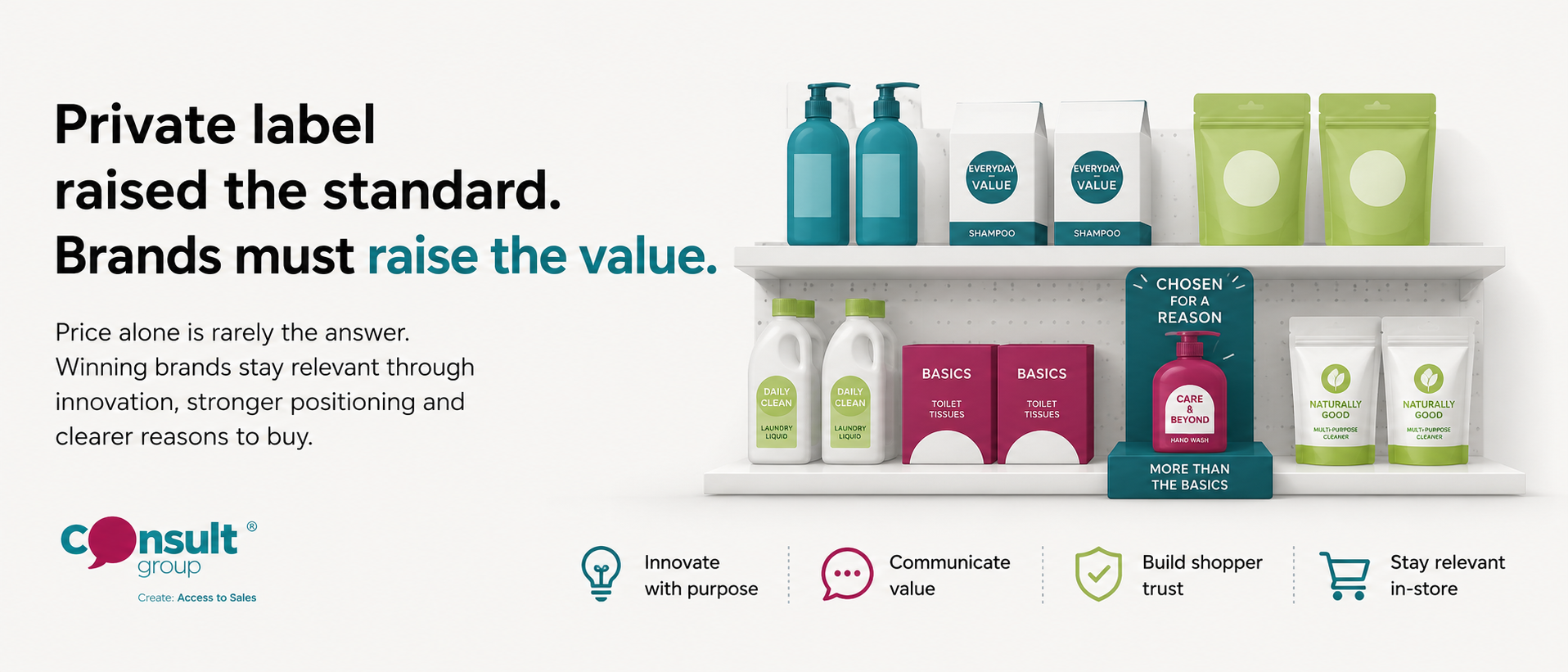
Competing on Price Is Rarely the Answer
When private label gains momentum, the natural reaction for many manufacturers is to look at pricing. While promotional activity certainly has its place, attempting to compete solely on price is rarely a sustainable long-term strategy. Retailers already have products designed to satisfy value-conscious shoppers. Launching another brand whose only advantage is being marginally cheaper often creates little additional value for either the retailer or the consumer.
Instead, brands should ask a different question.
What can we offer that makes our product worth choosing?
The answer often lies in creating stronger reasons to buy rather than simply reducing the cost of purchase. Whether that’s delivering a superior eating experience, solving a specific consumer need, introducing genuine product innovation or building stronger emotional connections with shoppers, differentiation creates far greater long-term value than discounting alone. Consumers may compare prices, but they also compare quality, convenience, trust and relevance.
Those are areas where branded products can continue to lead.
Innovation Still Belongs to Brands
One of the greatest advantages branded FMCG businesses possess is their ability to innovate. Retailers often develop private-label products in response to proven consumer demand. Branded manufacturers, on the other hand, are frequently responsible for creating that demand in the first place. Many of the trends shaping today’s supermarket shelves began with brands willing to identify emerging consumer behaviours, invest in research and development, and bring something genuinely new to market. Innovation doesn’t always mean launching an entirely new category. It can involve creating products for emerging occasions, improving convenience, introducing healthier alternatives, simplifying preparation or developing packaging that enhances the consumer experience.
The common thread is relevance.
The strongest innovations solve real problems or meet genuine consumer needs rather than simply adding another SKU to an already crowded shelf. Retailers value brands that continue to move categories forward because successful innovation benefits everyone. It attracts shoppers, creates interest and encourages repeat purchases across the category as a whole.
Build a Brand That Can’t Be Easily Replicated
Private label can often replicate product features. Replicating a trusted brand is considerably more difficult. Strong brands create value beyond the product itself. They build recognition, establish credibility and develop relationships with consumers over time. This doesn’t happen through advertising alone.
It comes from consistently delivering on the brand promise across every touchpoint, from packaging and product quality through to in-store execution and consumer experience.
As shoppers become more selective, clarity becomes increasingly important. Consumers should immediately understand who the product is for, what problem it solves and why it deserves a place in their basket. Packaging plays a significant role in communicating this. So too does consistent messaging, distinctive positioning and a clear understanding of the target shopper.
The more distinctive a brand becomes, the more difficult it is to substitute.
Think Like a Category Partner
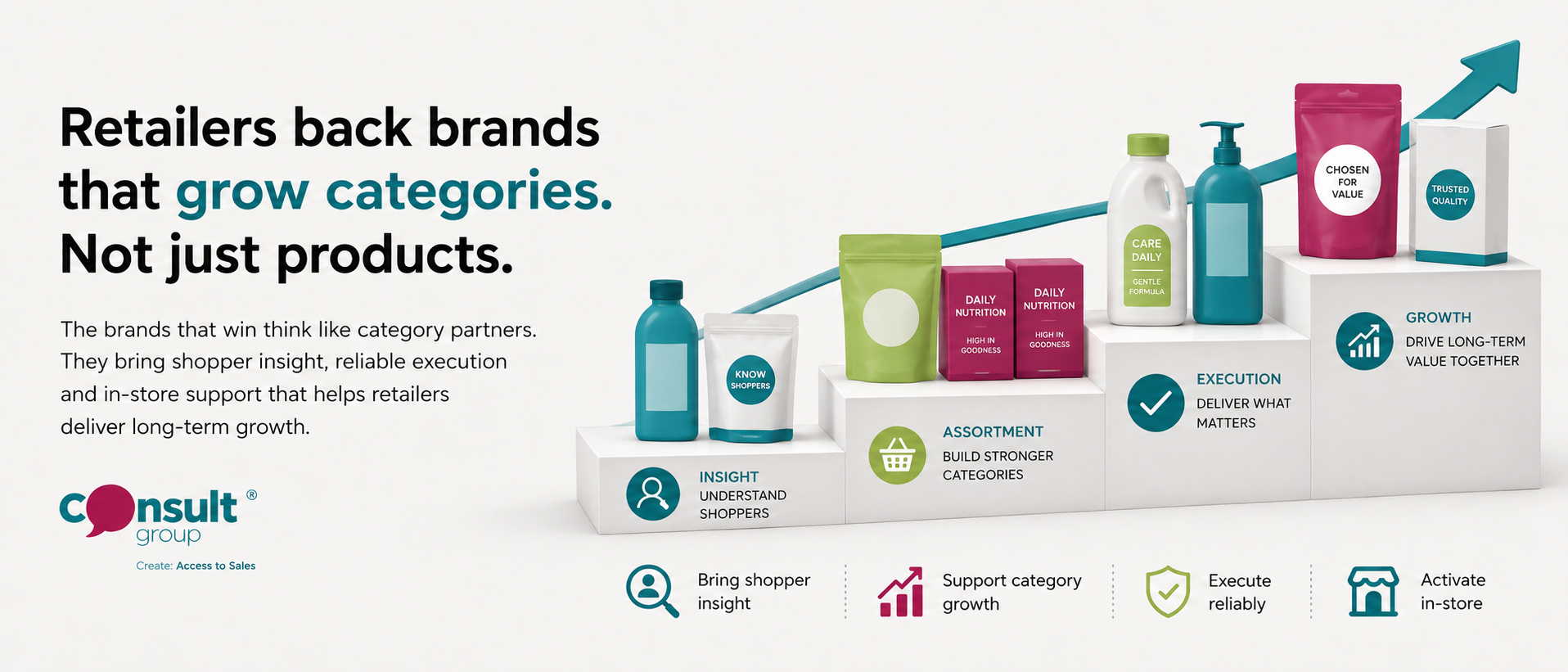
Retailers don’t simply buy products. They invest in categories. When reviewing ranging decisions, buyers are looking beyond individual sales forecasts. They’re considering how a product contributes to overall category performance, shopper engagement and long-term growth. The brands that perform best understand this.
Rather than approaching retailers with a product they want stocked, they approach them with ideas that help grow the category. That may involve identifying emerging consumer trends, presenting shopper insights, supporting promotional activity or demonstrating how a new product complements existing ranges rather than cannibalising them.
Retailers are increasingly looking for commercial partners who understand their business objectives, not simply suppliers looking for shelf space. Brands that can contribute meaningful insights alongside great products often become significantly more valuable to retail partners over time.
Execution Matters Just as Much as Innovation
Having a differentiated product is only part of the equation. Consistent execution remains one of the defining characteristics of successful FMCG businesses. Retailers need confidence that products will arrive on time, maintain consistent quality and support promotional activity without disrupting supply. Likewise, shoppers expect the products they enjoy to be available when they visit the shelf.
Even the strongest innovation can struggle if supply issues, inconsistent merchandising or poor retail execution undermine the consumer experience. Winning in today’s market requires brands to think beyond product development.
Operational excellence, retailer support, reliable forecasting and effective in-store activation all contribute to long-term success. The businesses that consistently outperform competitors are often those that combine compelling products with disciplined execution.
The Future Belongs to Brands That Continue to Add Value
Private label will almost certainly continue to grow. Retailers will continue investing in their own brands, consumers will continue seeking value and competition across FMCG categories will remain intense. But that doesn’t mean branded products become less important. If anything, it places greater emphasis on the role brands play in driving innovation, creating excitement and delivering experiences that private label cannot easily replicate.
The strongest brands won’t be those trying to become cheaper versions of retailer-owned products.
They’ll be the brands that remain relevant, solve meaningful consumer problems and continue giving retailers compelling reasons to allocate valuable shelf space. In many respects, private label isn’t changing what success looks like. It’s simply making it harder to achieve without genuine differentiation.
Where Consult Group Fits In
At Consult Group, we’ve worked alongside FMCG brands and major Australian retailers for more than 30 years. One thing has remained consistent throughout that time: retailers back brands that help grow categories. That’s why successful retail strategies extend well beyond the product itself. They consider consumer demand, category opportunities, innovation pipelines, retailer expectations and the commercial realities of bringing products successfully to market. Helping brands navigate those conversations is where experience makes a difference.
Whether preparing a new product launch, refining a retail strategy or positioning an existing range against increasing private-label competition, the focus should always remain on creating value that retailers and consumers genuinely recognise.
Final Thoughts
Private label isn’t the end of branded FMCG. It’s a reminder that standing still is no longer an option. As retailer-owned brands continue to improve, branded manufacturers must become clearer about the role they play, the problems they solve and the value they bring to both shoppers and retailers. The brands that continue to innovate, execute consistently and think beyond the product itself will remain essential partners in Australia’s retail landscape. Ultimately, competing with private label isn’t about winning a pricing battle. It’s about building a brand that consumers actively choose and retailers genuinely want on their shelves.