
A strong product idea is not always a market-ready product. Before approaching retailers, appointing a distributor or investing heavily in a launch, an FMCG business needs to know that the product can stand up commercially and operationally.
That means looking beyond whether people like the product. Can it be produced consistently? Does the pricing work after retailer and distributor margins are included? Is the packaging suitable for the channel? Can the business support demand if orders arrive faster than expected?
Finding gaps at this stage is not a failure. It is far less expensive to adjust the product, pricing or supply model before launch than to correct them after stock has been produced or a retailer has committed to a ranging decision.
The following checks can help you decide whether your FMCG product is ready to move from a promising concept to a viable market launch.
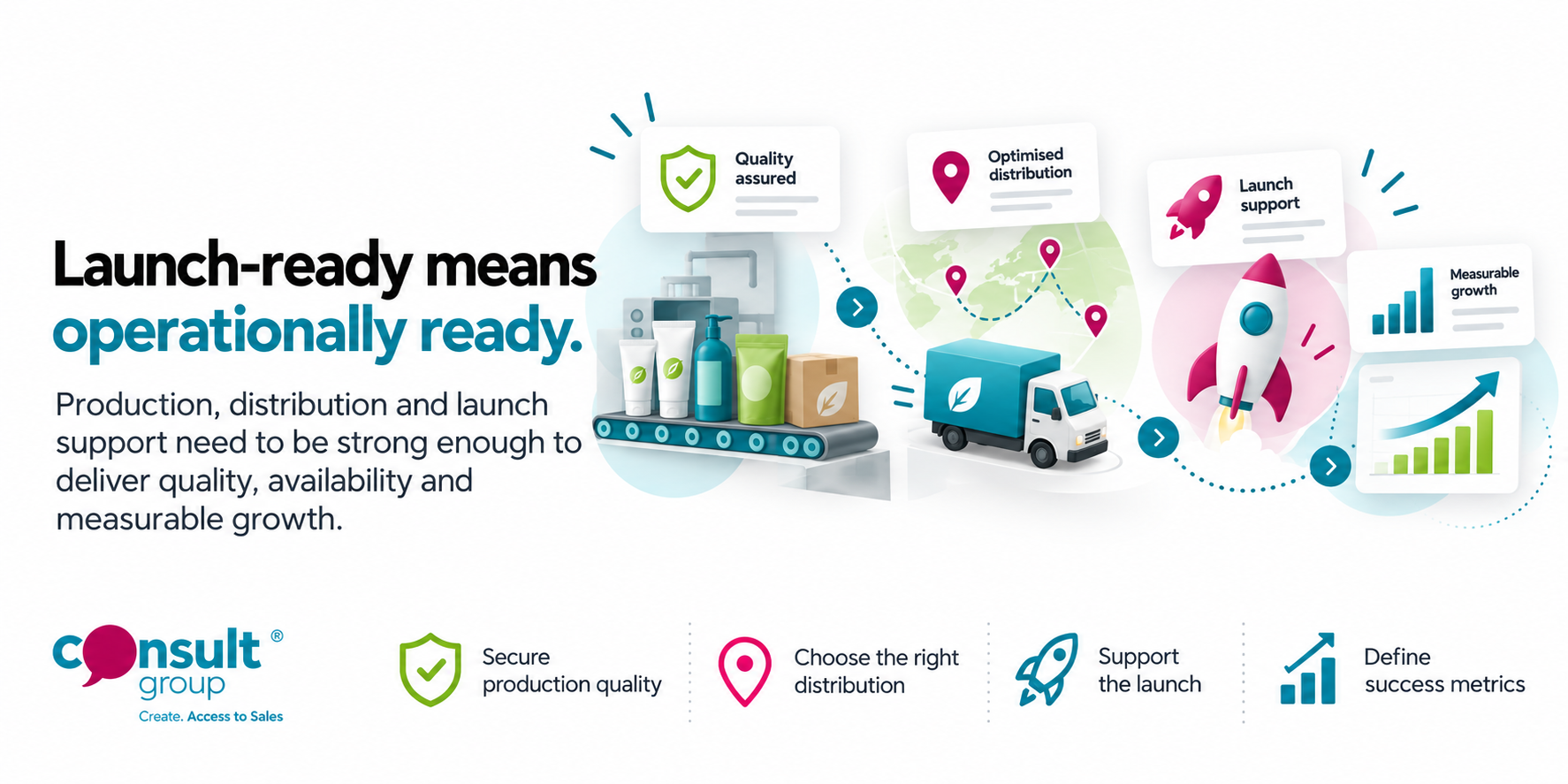
1. You can explain who will buy it and why
A product is not ready for market if its target customer is simply ‘everyone’. You should be able to describe the customer, the buying occasion and the reason they would choose your product over the alternatives already available.
Start with the problem the product solves or the need it meets. Is it more convenient, better value, easier to use, healthier, more sustainable or designed for a customer who is not being served well? The answer needs to be meaningful to the shopper, rather than based only on features that matter internally to the business.
Early demand can be tested through sampling, small online sales, independent retailers, markets or a limited regional release. The aim is not just to collect positive comments. Look for buying behaviour: whether customers will pay the intended price, purchase more than once and recommend the product to others.
If interest disappears when customers are asked to pay, the proposition or price may need more work.
2. The product has a clear place in the category
Retailers and distributors assess products within a category, not in isolation. A new product therefore needs an obvious role alongside the brands, formats and price points already competing for attention.
Review the current range in your target channels. Identify the leading products, emerging competitors, common pack sizes, typical promotional prices and any gaps in the range. Then ask what your product adds. It might attract a new shopper, serve a different occasion, offer a format that is missing or respond to a growing consumer preference.
Be careful with points of difference that are easy for competitors to copy or difficult for shoppers to notice. A genuinely useful distinction should be clear on the pack and easy to explain in a sentence. If the product looks interchangeable with several existing options, a buyer may struggle to see why it deserves to be added.
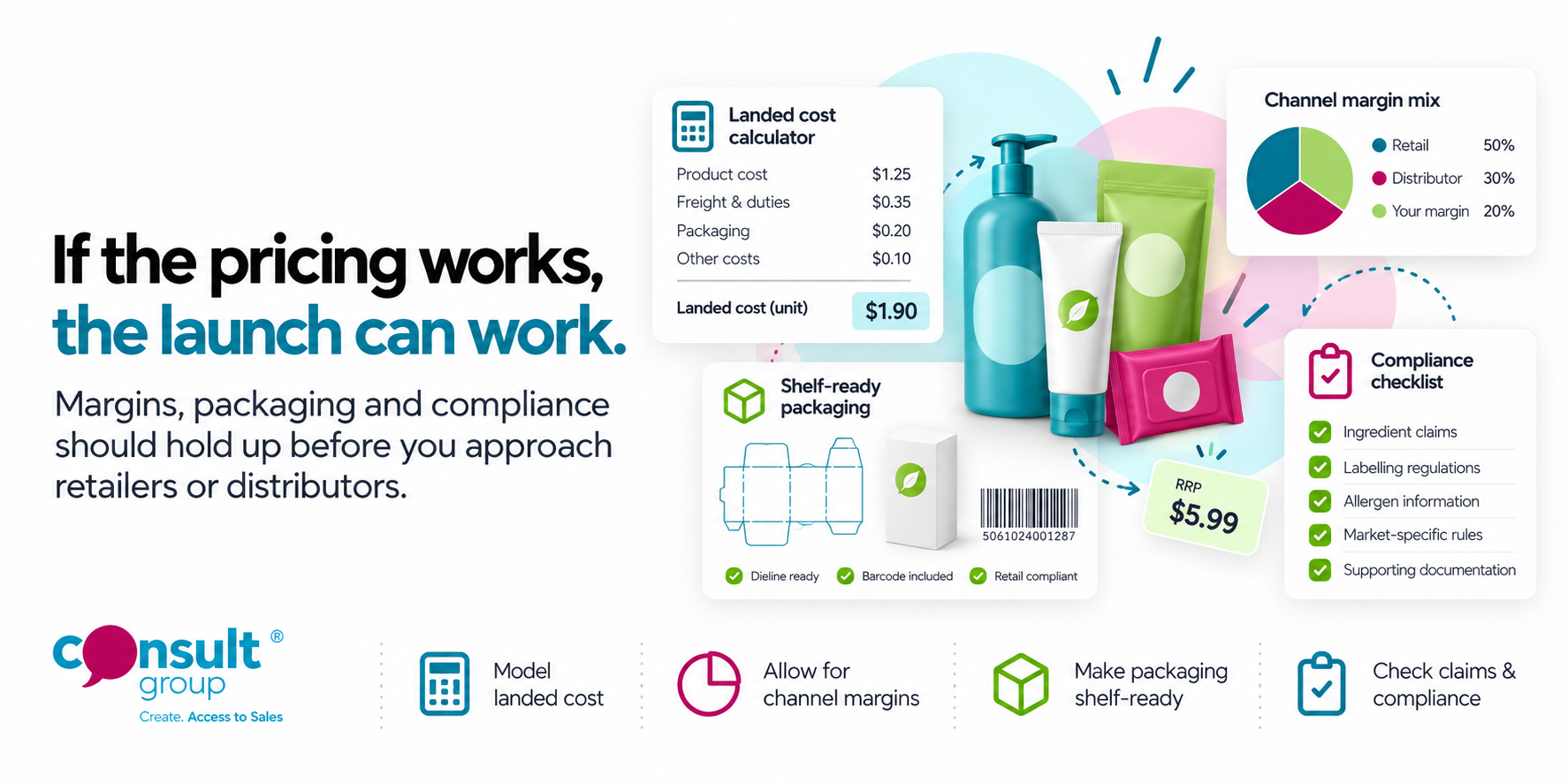
3. Your pricing works throughout the supply chain
One of the most common readiness problems is setting a retail price first and trying to fit every cost underneath it. FMCG pricing needs to work for each party involved, including the manufacturer, distributor and retailer.
Build the model from the full landed cost of the product. Include ingredients or materials, manufacturing, packaging, freight, warehousing, quality assurance, wastage and any other costs required to get a saleable unit into the channel. Then allow for distributor and retailer margins, GST where applicable, promotional discounts, rebates and other trading terms.
Test the numbers under realistic conditions. What happens if freight increases, production volumes are lower than forecast or the retailer expects regular promotional activity? A product may appear profitable at its recommended retail price but lose money once discounts and channel costs are included.
You should know the minimum viable wholesale price, the margin available to each channel partner and how much room remains for promotions before entering commercial discussions.
4. The packaging is ready for the customer and the channel
Packaging needs to do more than look attractive. It must communicate the product quickly, protect it throughout the supply chain and meet the practical requirements of the intended sales channel.
A shopper should be able to identify what the product is, who it is for and why it is worth considering without needing a detailed explanation. The brand, product name, key benefit and variant should be easy to understand when the pack is viewed at shelf distance or as a small online image.
The physical format matters as well. Check the pack dimensions, case configuration, shelf life, durability and ease of handling. Supermarkets, specialty retailers, petrol and convenience stores and ecommerce businesses may all favour different sizes and formats. Outer cartons may also need to be suitable for efficient storage, transport and shelf replenishment.
Before printing a large quantity, test the finished packaging in realistic conditions. Check how it displays, stacks, travels and performs over time. A small packaging issue becomes an expensive one once thousands of units have been produced.
5. Compliance and product claims have been checked
Compliance should be resolved before the product is presented as launch-ready. The requirements will vary by category, but may cover labelling, ingredient declarations, allergens, nutrition information, weights and measures, safety warnings, country-of-origin statements and product-specific standards.
Marketing claims also require care. Statements about health, performance, sustainability or product origin should be accurate, supportable and consistent across the packaging, website and sales material. Even an unintended error can lead to reprinting costs, delayed ranging or reputational damage.
Do not leave these checks until the final artwork is about to be printed. Build regulatory and legal review into the development timeline so any necessary changes can be made without derailing the launch.
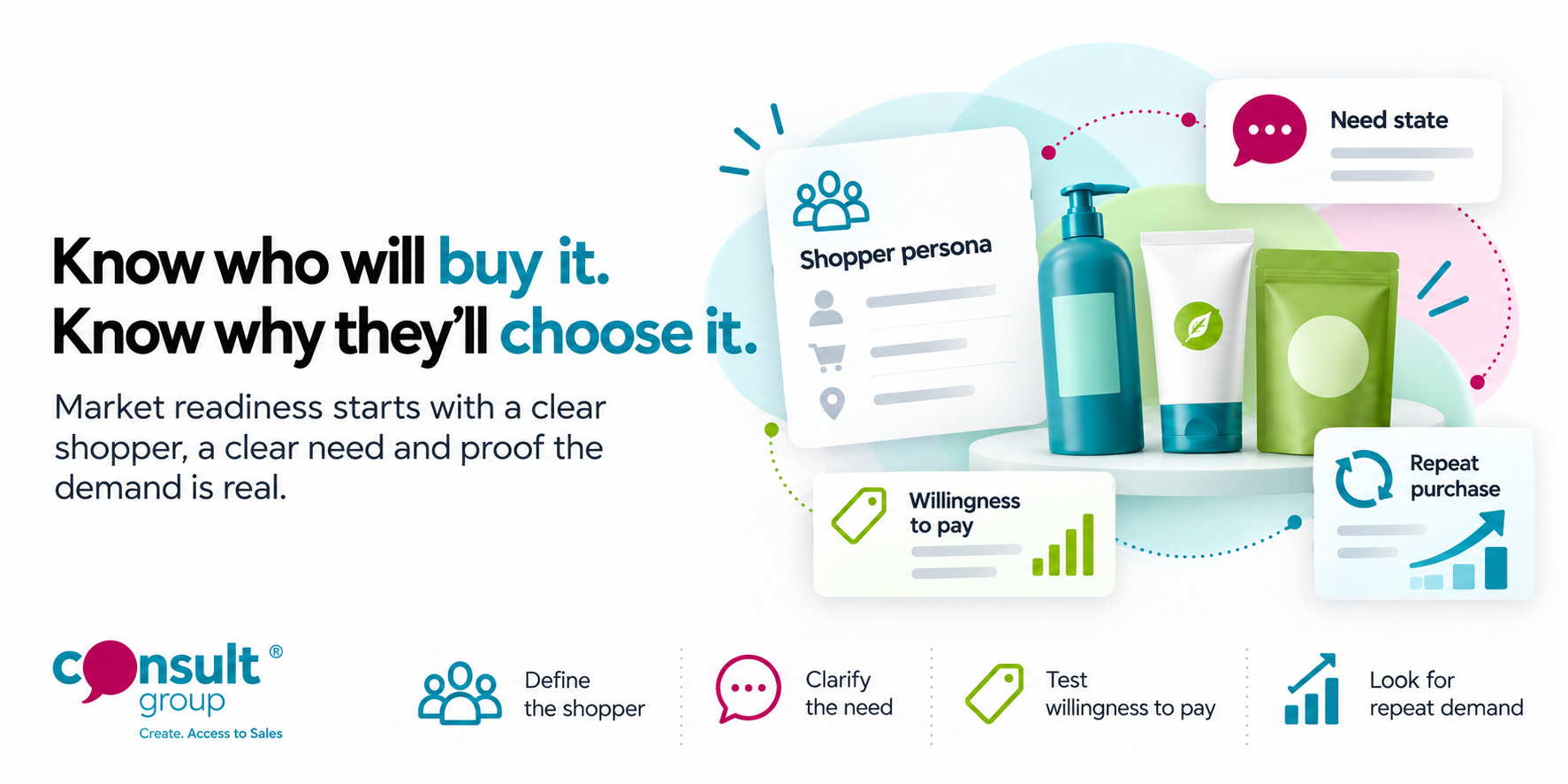
6. Production can deliver consistent quality at the required volume
Producing a successful trial batch is different from fulfilling ongoing commercial orders. Before launch, confirm that the manufacturer can maintain the same quality as volume increases and that lead times align with the expectations of the channel.
Document product specifications, quality checks and acceptable tolerances. Clarify minimum order quantities, production windows, ingredient or material availability and the process for dealing with faults or rejected stock. If the product relies on a single supplier or a hard-to-source component, consider what would happen if that supply was interrupted.
Forecasting should include more than the ideal sales scenario. Model a slower launch so cash is not trapped in excess stock, and a stronger-than-expected launch so you know whether production can respond without prolonged out-of-stocks. Both situations can put pressure on a young FMCG brand.
7. Your distribution model suits the launch
A good product can still fail if it cannot reach customers reliably. Decide how orders will be received, stored, picked, delivered and tracked before committing to a channel.
For a direct-to-consumer launch, consider fulfilment costs, delivery times, damaged stock and customer service. For retail, determine whether you can deliver directly to stores or distribution centres, or whether a distributor is needed. A distributor can provide reach and established relationships, but its margin and operating requirements must be built into the financial model.
The right approach depends on the product, geography, order size and stage of the business. It can be sensible to begin with a narrower channel or region, establish repeatable demand and then expand once the operational model has been proven.
8. The business is ready to support the launch
Getting the product into market is only the start. It needs enough marketing, sales and operational support to generate trial, maintain availability and respond quickly when issues arise.
Prepare a realistic launch plan covering the target audience, key message, channel activity, promotional calendar and budget. If retail is involved, buyers will want to know how the brand plans to create demand rather than relying on shelf presence alone. Depending on the product, support might include digital advertising, sampling, retailer promotions, public relations, content or partnerships.
Assign responsibility for monitoring sales, stock levels, customer feedback and retailer communication. Without clear ownership, useful information can be missed and small launch problems can become much harder to correct.
9. You know what success will look like
A launch needs defined measures of success. Revenue matters, but it should not be the only measure used to judge whether the product is gaining traction.
Depending on the channel, useful measures may include unit sales, sales per store per week, gross margin, repeat purchase, distribution growth, promotional uplift, stock availability and customer acquisition cost. Set an initial review period and decide in advance what would prompt the business to continue, adjust or pause the rollout.
Realistic targets make it easier to separate normal early-stage learning from a deeper problem with the proposition. They also give the business credible information to use in later conversations with distributors and retailers.
A simple market readiness check
Before moving ahead, you should be able to answer yes to the following questions:
- Do we know exactly who the product is for and why they will buy it?
- Have customers demonstrated demand at or near the intended price?
- Does the product have a clear role within its category?
- Do the margins work for us and our channel partners?
- Is the packaging compliant, practical and easy to understand?
- Can production maintain quality and meet realistic order volumes?
- Can we store and distribute the product reliably?
- Do we have the budget and resources to support the launch?
- Have we defined how launch performance will be measured?
A ‘no’ does not necessarily mean the product should be abandoned. It identifies where more work or testing is needed before greater time and money are committed.
Make the decision before the market makes it for you
Market readiness is not about eliminating every risk. No launch goes exactly to plan. It is about resolving the issues that can be anticipated and entering the market with a product, commercial model and operating plan that can withstand real-world pressure.
An independent review can be particularly valuable when a team has worked closely on a product for a long time. Fresh commercial scrutiny may identify gaps in positioning, pricing, packaging, distribution or launch planning before they become costly.
Consult Group works with FMCG businesses to assess market readiness and build practical pathways from product concept to launch. If you are preparing to take a new product to market, we can help you establish what is ready, what still needs attention and the next steps required to move forward with confidence.