Distribution often looks straightforward while an FMCG brand is small. Stock is produced, stored and sent to a manageable number of customers. As the business adds retailers, regions and product lines, that simple arrangement can become expensive and difficult to control.
The warning signs are familiar: stock is sitting in the wrong warehouse, freight costs are eating into margin, orders are being short-supplied, and the team is spending too much time fixing preventable delivery problems.
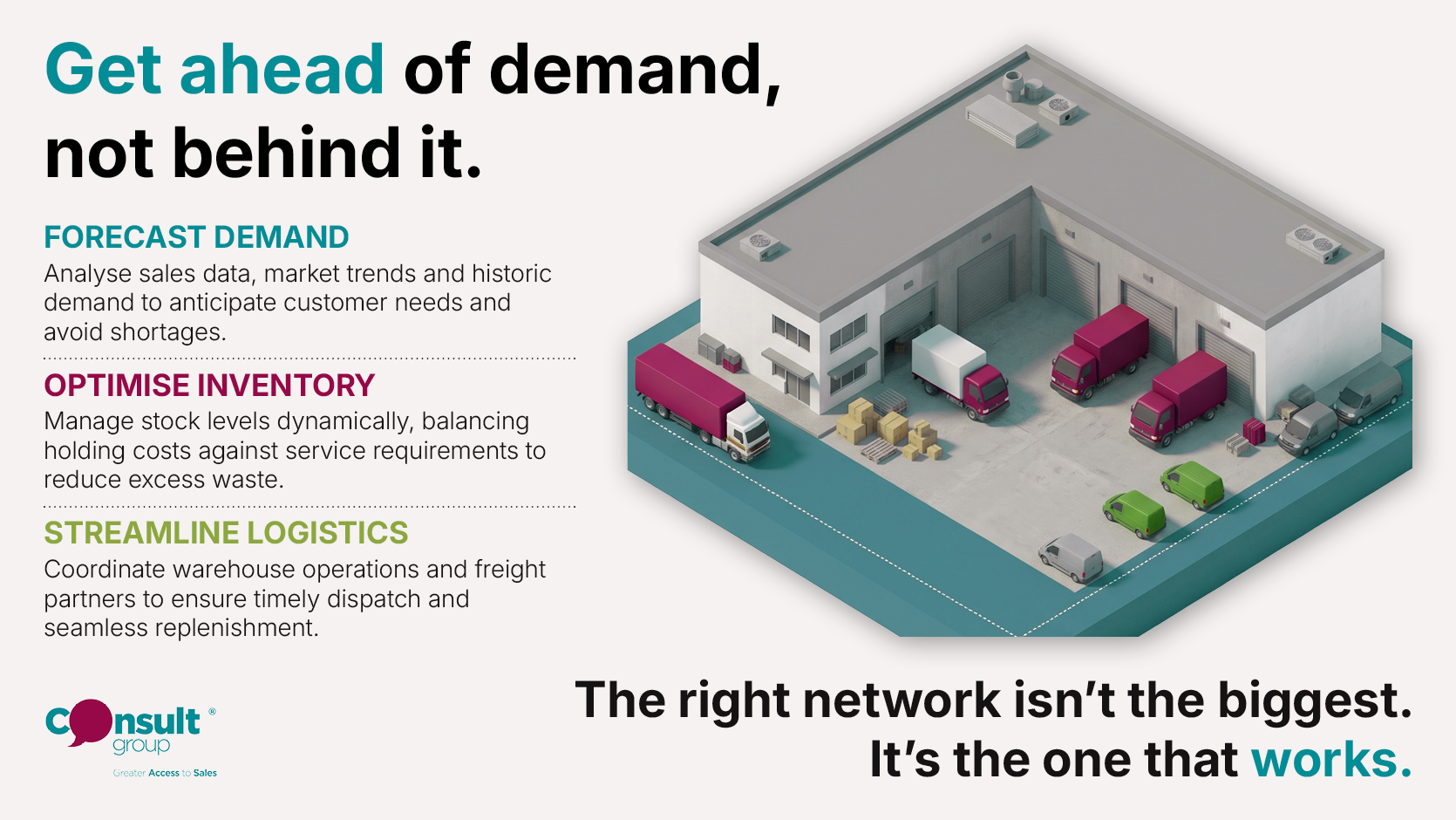
A better distribution model does not have to be the biggest or most sophisticated option available. It needs to suit the brand’s current channels, service expectations and growth plans. The following steps can help Australian FMCG businesses build a network that works now and remains practical as sales increase.
Start with the channel rather than the warehouse
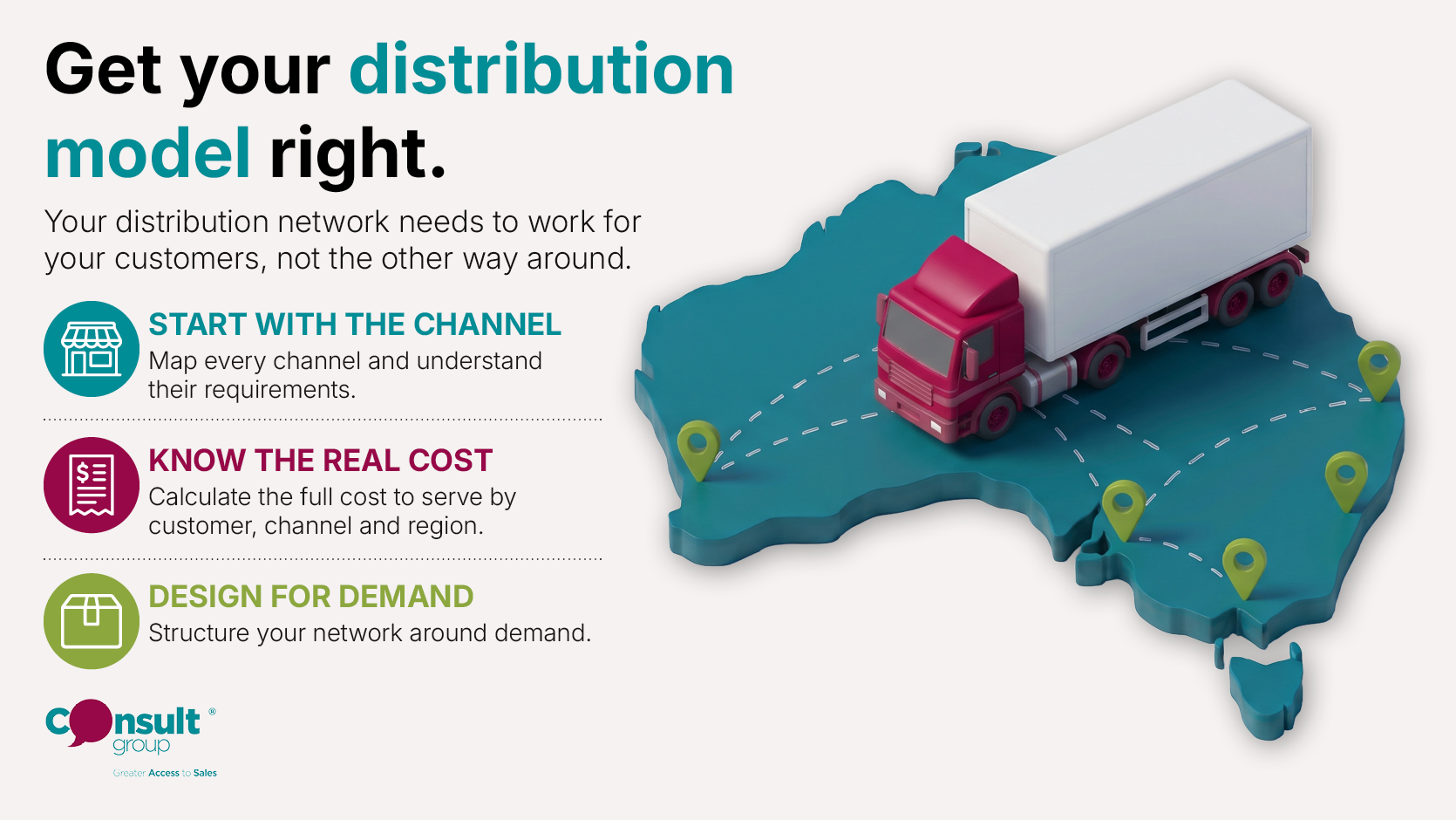
The right distribution model depends on where the product is being sold. A national supermarket account has different ordering, labelling and delivery requirements from an independent grocer, pharmacy group, ecommerce customer or petrol and convenience chain.
Map each channel before changing providers or adding warehouse locations. Record where orders are placed, the expected lead time, minimum order quantities, delivery windows, case and pallet requirements, and any service penalties that may apply. This shows what the network actually needs to do instead of starting with a generic freight or warehousing solution.
It is also worth separating current requirements from future ambitions. Paying for a national network before the sales volume exists can add unnecessary cost. On the other hand, a provider that works well for a small local range may struggle when the brand wins a large retail account. The aim is to choose a model with a sensible path to the next stage.
Know the real cost of serving each customer
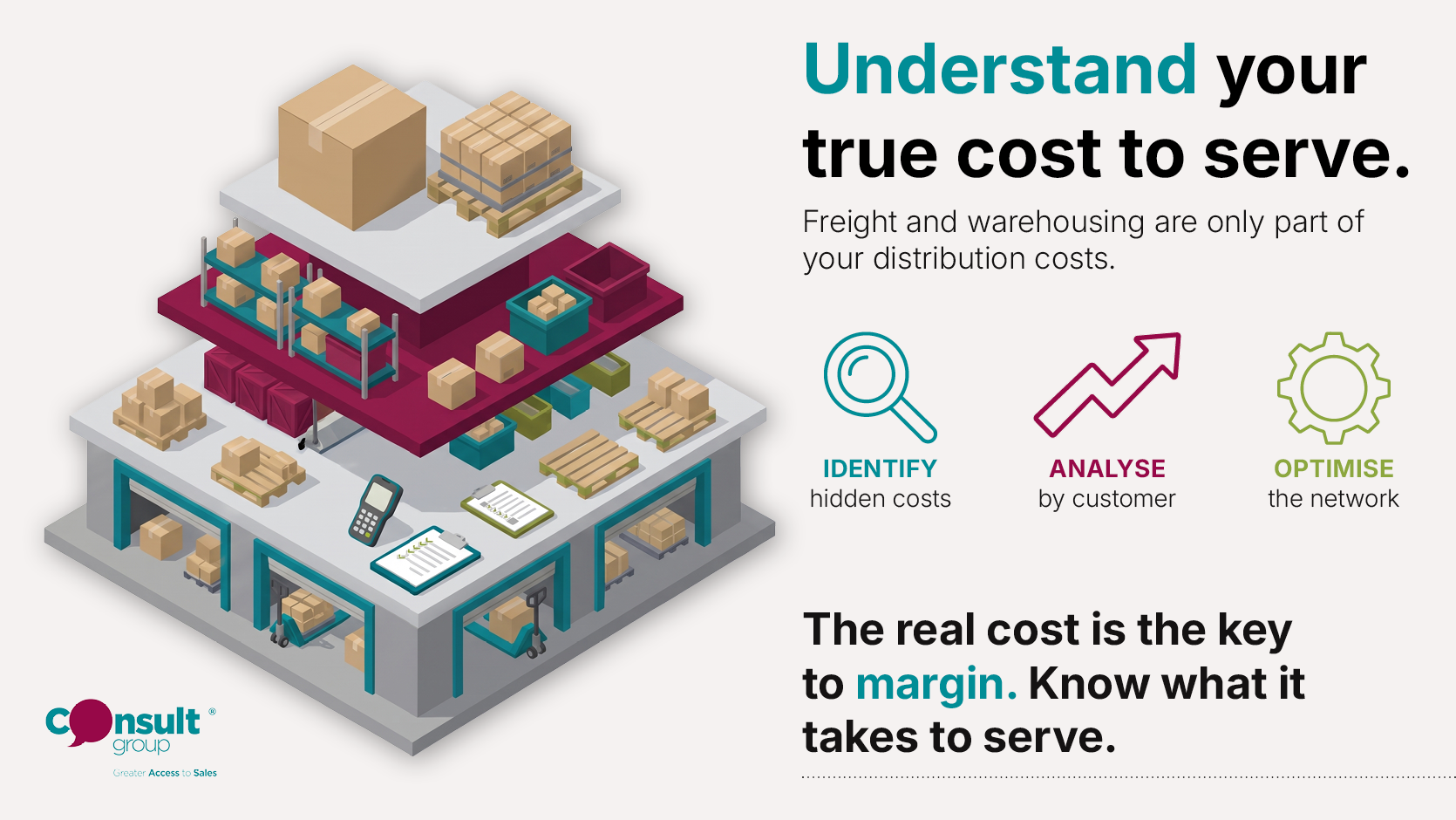
Many brands know their manufacturing cost and wholesale price but have a less accurate view of the cost between finished production and the customer’s receiving dock. That gap can hide a large amount of margin leakage.
Calculate the full cost to serve by customer, channel, product and region. Include inbound freight, storage, pick and pack fees, pallet movements, order processing, retailer compliance costs, promotional peaks, returns, damaged stock and urgent deliveries. Remote-area or low-volume orders may be valuable, but only if the commercial model reflects what they cost to fulfil.
This analysis can change decisions about order minimums, distributor terms, product range and warehouse locations. It can also show where a small number of inefficient orders are creating more work than a much larger, predictable account.
Design the network around demand
Australia’s size makes distribution planning more complicated than drawing a line between a factory and a national warehouse. A single-site model may keep inventory together and simplify control, while state-based stock can reduce delivery times and long-distance freight. Neither structure is automatically better.
Use order history and realistic sales forecasts to compare the options. Look at where demand is concentrated, how quickly each channel expects delivery, the value and shelf life of the stock, and how often inventory would need to be replenished between locations.
Adding another warehouse can improve service, but it also divides inventory. Slow moving products may then be overstocked in one state and unavailable in another. Before adding sites, test whether better forecasting, more frequent linehaul or different customer order cycles could solve the same problem with less complexity.
Choose partners for the work you actually need
A distributor, third-party logistics provider and freight carrier perform different roles. A distributor may buy and resell the product, manage customer relationships and provide access to established accounts. A 3PL normally stores and fulfils stock on the brand’s behalf. A freight carrier moves orders but does not manage the broader commercial process.
Define the role before approaching providers. Ask how they handle FMCG products, promotional volume, expiry dates, retailer bookings, recalls, reporting and claims. Check which regions and channels they serve well rather than relying only on a national coverage map.
The lowest quoted rate does not always produce the lowest overall cost. A provider that reduces delivery failures, stock write-offs and administration may be better value than one with cheaper storage and pick fees. Service capability and reporting quality deserve the same attention as the rate card.
Get the retail details right
Major retailers require suppliers to meet specific standards for consumer units, cartons, pallets and product data. GS1 Australia’s retailer requirements guide notes that failures can cause handling problems, delivery delays or rejected orders.
Retail readiness should cover correct GTINs, carton barcodes, pallet labels, advance shipping information where required, accurate dimensions and weights, and product data that matches the physical stock. These details need to remain consistent across the brand, warehouse, distributor and retailer systems.
Do not treat compliance as a one-off setup task. Packaging changes, new case configurations and product extensions can all affect identifiers and master data. A simple approval process before new stock is produced can prevent expensive corrections later.
Improve forecasting before adding more stock
Extra inventory can hide distribution problems for a while, but it ties up cash and increases the risk of ageing stock. Better forecasting gives the business more room to manage production and freight without relying on large safety buffers.
Build forecasts from customer orders, promotional plans, seasonal patterns and known ranging changes. Compare forecasts with actual sales regularly and record why the result differed. A forecast that is reviewed and corrected is more useful than an annual number that nobody trusts.
Share the latest assumptions with manufacturers, warehouses and distribution partners. Promotional spikes are easier to manage when everyone can plan labour, storage and transport in advance. The same applies when a product is being discontinued or moved into a different pack size.
Manage shelf life and traceability
For food and other date-sensitive products, stock rotation and minimum life on receipt can determine whether a retailer accepts an order. The warehouse needs clear rules for batch control, first-expired-first-out picking and the handling of short-dated inventory.
Traceability is also a practical distribution requirement. Food Standards Australia New Zealand advises food businesses to keep records that identify suppliers, customers, delivery dates, batch or lot numbers and quantities. Manufacturers, wholesalers and importers must also have a food recall system.
Test the process before there is a real problem. The business should be able to identify affected batches, locate remaining stock and contact customers quickly. If that information sits across several disconnected spreadsheets and provider systems, the recall plan may be slower than expected.
Track service levels that reveal the cause
Delivery in full on time is an important measure, but one percentage does not explain why orders are failing. Break the result into useful causes such as insufficient stock, picking errors, missed booking windows, carrier delays, rejected pallets and incorrect paperwork.
Monitor a small set of measures consistently. Useful examples include order fill rate, DIFOT, stock availability, inventory accuracy, write-offs, claims, cost per order and minimum life on receipt. Review them by customer or channel so a strong overall result does not hide a recurring problem with an important account.
Agree on definitions with providers. If the brand, 3PL and retailer calculate on-time delivery differently, monthly reporting can create an argument instead of showing what needs to change.
Plan for growth and disruption
Distribution arrangements should be tested against more than the normal month. Consider what would happen if a major promotion doubled weekly orders, a retailer moved its delivery window, a key product was recalled, or a carrier could not service a region.
Set practical triggers for reviewing the network. These might include reaching a particular order volume in another state, winning a national account, adding temperature-controlled products or exceeding the provider’s available storage capacity. Defined triggers make expansion a planned decision rather than a rushed reaction.
The Australian Food and Grocery Council’s supplier and retailer research highlights reliable execution, transparent communication and consistent follow-through as foundations for stronger partnerships. Those habits matter inside the supply chain as much as they do in the buyer relationship.
Where we can help
Distribution decisions affect margin, service and the brand’s reputation with retailers. They also become harder to unwind once stock, systems and customer agreements depend on them.
Consult Group works with established and emerging FMCG brands to identify best-fit distribution solutions, including supply chain logistics, 3PL warehousing, last-mile specialists and state-based distribution centres. With more than 33 years of FMCG experience, the team understands the operating requirements behind Australian retail growth.
If your current network is becoming expensive, difficult to manage or unable to support the next stage of growth, talk to us about the options available for your brand.